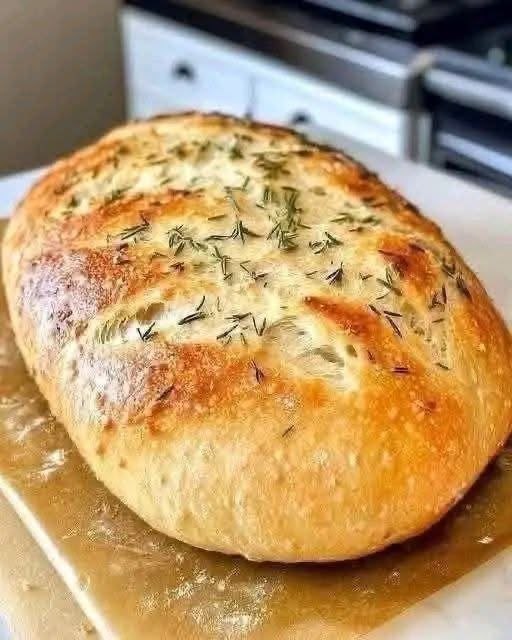
There are few aromas as instantly comforting as a fresh loaf of artisan bread baking in the home oven. Combining an airy, pillowy interior with a blistered, crackly crust, this Rosemary Sea Salt Artisan Loaf brings bakery-quality bread making into your kitchen without complicated techniques or tedious physical labor.
By pairing fresh, aromatic rosemary needles with coarse flaky sea salt, this recipe elevates the classic no-knead bread method into a flavorful, Mediterranean-inspired centerpiece. The woodsy, piney essence of fresh rosemary infuses the sticky dough during its long overnight fermentation, resulting in a rich flavor profile that pairs effortlessly with extra virgin olive oil, creamy soups, charcuterie boards, or cozy pasta dinners.
Whether you are new to yeast baking or an experienced home cook looking for a reliable, low-effort loaf, this four-step recipe yields professional results using basic kitchen staples.
Why You Will Love This Rosemary Artisan Bread
- Zero Kneading Required: High hydration allows the dough to build a strong, elastic gluten network naturally over time without physical kneading or special stand mixers.
- Simple Pantry Ingredients: Requires only basic kitchen essentials—flour, yeast, water, fine salt, fresh rosemary, and flaky sea salt.
- Bakery-Style Crust & Crumb: Trapping natural steam inside a Dutch oven produces a crisp, golden-brown crust with a light, open, and chewy interior.
- Flexible Overnight Schedule: Mix the dough in 5 minutes, let it rest on the counter overnight, and bake it whenever you are ready the next morning.
- Versatile Serving Options: Ideal for dipping in extra virgin olive oil, slicing for gourmet grilled cheese sandwiches, or serving alongside hearty winter stews.
The Science of No-Knead Rosemary Bread
Understanding the culinary principles behind high-hydration artisan baking helps ensure a perfect loaf every single time:
- Autolysis & Natural Gluten Development: Combining flour with a high proportion of water (around 75% to 80% hydration) enables glutenin and gliadin proteins to hydrate fully and align automatically. Slow fermentation replaces manual kneading by allowing expanding yeast gas to stretch and strengthen these protein strands gently over 12 to 18 hours.
- Herb Oil Infusion: Fresh rosemary contains natural essential oils (primarily eucalyptol and camphor) that dissolve into the wet dough during the extended proofing period. This slow steep infuses the entire crumb with subtle herb flavor rather than sitting on top as a dry garnish.
- Steam Trap Technology: Baking inside a preheated covered Dutch oven traps escaping moisture from the high-hydration dough. This steam keeps the surface soft during the initial oven spring, allowing maximum expansion before forming a thin, crackly crust.
Recipe Metadata
- Prep Time: 10 minutes
- Rest/Proofing Time: 12 to 18 hours
- Cook Time: 45 minutes
- Total Time: 13 to 19 hours
- Yield: 1 round artisan loaf (approx. 8–10 slices)
- Dietary Profile: Vegan, Vegetarian, Dairy-Free, Nut-Free, Plant-Based
Ingredients
Primary Dough Components
- 3 cups (360g) unbleached all-purpose flour or bread flour (plus extra for shaping)
- 2 tbsp fresh rosemary, finely chopped (divided: 1½ tbsp for dough, ½ tbsp for topping)
- 2 tsp fine sea salt or kosher salt
- ½ tsp instant yeast or active dry yeast
- 1½ cups (360ml) warm water (around 100°F–105°F / 38°C–40°C)
Topping & Crust Finish
- 1 tbsp extra virgin olive oil (for brushing before baking)
- 1 tsp coarse flaky sea salt (such as Maldon)
- ½ tbsp fresh whole rosemary needles
Step-by-Step Baking Instructions
Step 1: Mix the Dough
- In a large glass or ceramic mixing bowl, whisk together the unbleached flour, finely chopped fresh rosemary, fine sea salt, and instant yeast until thoroughly distributed.
- Pour the warm water into the flour mixture.
- Using a sturdy wooden spoon or rubber spatula, stir until all dry flour patches disappear and a sticky, shaggy dough forms. (Do not worry if the dough looks loose or messy—the high hydration is essential for an airy crumb.)
Step 2: Overnight Fermentation
- Cover the mixing bowl tightly with plastic wrap or a snug lid to lock in humidity.
- Place the bowl in a warm, draft-free area at room temperature for 12 to 18 hours.
- After resting, the dough will have more than doubled in size, showing a bubbly, elastic surface with a faint, pleasant yeast-and-rosemary aroma.
Step 3: Shape & Final Rest
- Lay a sheet of parchment paper on your work surface and dust it lightly with flour.
- Gently scrape the sticky dough onto the parchment paper using floured hands.
- Fold the outer edges of the dough inward toward the center 3 or 4 times to build surface tension, then flip it seam-side down to form a smooth round ball (boule).
- Lightly brush the top of the loaf with extra virgin olive oil, then sprinkle with the reserved fresh rosemary needles and coarse flaky sea salt.
- Cover loosely with a clean cotton kitchen towel and let it rest for 30 to 45 minutes.
Step 4: Preheat & Bake
- Place your 4-to-6-quart Dutch oven (or heat-safe pot with an oven-safe lid) inside your oven on the center rack.
- Preheat the oven to 450°F (230°C) for at least 30 minutes so the pot becomes scorching hot.
- Carefully remove the hot Dutch oven using heavy oven mitts. Remove the lid.
- Use the corners of the parchment paper as a sling to lift the dough ball and lower it directly into the center of the preheated pot.
- Cover tightly with the hot lid and return to the oven.
- Bake covered at 450°F (230°C) for 30 minutes to trap steam.
- Carefully remove the lid and continue baking uncovered for an additional 12 to 15 minutes until the top reaches a deep golden-brown color and the crust sounds hollow when lightly tapped.
- Lift the bread out using the parchment sling and transfer it to a wire cooling rack. Cool for at least 45 minutes before slicing.
Pro Tips for Artisan Success
- Use Fresh Rosemary: Always opt for fresh rosemary sprigs over dried herbs. Dried rosemary can turn brittle and sharp during baking, whereas fresh needles yield a tender texture and fragrant aroma.
- Preheat the Baking Vessel: A scorching-hot Dutch oven creates a powerful blast of heat that triggers “oven spring,” driving maximum expansion before the outer crust sets.
- Let the Loaf Cool Completely: Slicing into hot, freshly baked bread releases trapped steam prematurely, causing the interior crumb to become gummy and dense. Waiting 45 minutes allows the crumb structure to set properly.
Common Mistakes & How to Avoid Them
- Over-Salting the Dough Interior: Coarse flaky sea salt works best as a topping applied right before baking. Stick to fine sea salt inside the dough mixture so it dissolves evenly without inhibiting yeast activity.
- Adding Too Much Extra Flour: It can be tempting to add extra flour when handling wet, sticky dough. Resist the urge, as lowering the water ratio results in a heavy, dense loaf instead of an airy artisan crumb.
- Using Water That Is Too Hot: Water above 120°F (49°C) can kill active yeast cells, preventing the dough from expanding during its long rest. Keep your water lukewarm to the touch.
Flavor Adaptations & Variations
- Garlic Rosemary Loaf: Fold 3 minced garlic cloves or ½ cup of roasted garlic cloves directly into the dough during the initial mixing phase.
- Rosemary Parmesan: Add ½ cup of freshly grated parmesan or pecorino cheese to the dry ingredients for a savory, cheesy finish.
- Olive & Rosemary Tapenade Loaf: Fold ½ cup of pitted, chopped Kalamata or Castelvetrano olives into the dough for a Mediterranean flavor profile.
Storage & Reheating Instructions
- Room Temperature: Store the uncut loaf cut-side down on a wooden cutting board or in a paper bag for up to 3 days. Avoid plastic wrap, as it traps humidity and softens the crispy crust.
- Freezing: Slice the completely cooled loaf into individual portions. Place parchment paper strips between slices, store in a freezer-safe bag, and freeze for up to 3 months. Toast slices directly from frozen.
- Refreshing Stale Bread: Run an uncut, day-old loaf quickly under cold water for 2 seconds, then warm in a 400°F (200°C) oven for 8 to 10 minutes to restore a crackly, freshly baked crust.
SEO-Optimized Frequently Asked Questions
Can I make this rosemary bread without a Dutch oven?
Yes! You can use any heavy, heat-safe metal pot or stainless steel saucepan with an oven-safe lid. Alternatively, place a baking sheet on the middle rack and set a cast-iron skillet filled with 1 cup of boiling water on the bottom rack right as you put the bread in to create a steam environment manually.
Why is my artisan bread dough so wet and sticky?
A loose, sticky consistency is characteristic of high-hydration no-knead bread recipes. Excess moisture generates the trapped steam needed to yield a thin, blistered crust and an open, airy crumb without physical kneading.
Can I use dried rosemary instead of fresh?
While fresh rosemary is recommended for its flavor and soft texture, you can substitute 2 teaspoons of dried rosemary if needed. Crush the dried herb between your fingers before adding it to the flour to release its essential oils.
Estimated Nutritional Snapshot (Per Serving – Based on 10 Slices)
- Calories: ~170 kcal
- Protein: 5g
- Carbohydrates: 34g
- Dietary Fiber: 1.5g
- Sugars: 0.5g
- Fat: 1.5g (from olive oil finish)
- Sodium: 480mg